


We kept up our sea day routine on the pool deck in the morning, and then prepared to return to reality, packing everything up to disembark the next morning. Our packing turned out to be rather painless. Yes, we have purchased quite a few items to bring home, but our suitcases were not full when we left, leaving room to add things when heading home. Plus, we have brought a collapsable duffle bag to use. We filled that duffle bag with the items we purchased in Cusco and will be carrying it onto the airplane home. We had a nice last dinner in the Dining Room, saying our farewells to the waiter team we dined with the most. I gave each of them an extra cash tip in thanks for the wonderful service they provided. We also tipped extra the two-person housekeeping team, who came into our room twice a day to clean, replace towels and make/turn down our beds. They had been very accommodating in working around our schedule to clean the rooms, and always kept our ice bucket full. And Laura and I went to Patrick, our Neptune Suites concierge, to give our heartfelt thanks and tip. Patrick seemed to learn and anticipate many of our questions and concerns, providing us information and assistance sometimes before we even asked. I asked if he wanted to come home with us to help keep me organized! Keep in mind, HAL billed a daily gratuities for both Laura and I, so these cash tips were above and beyond the general gratuities.
Disembarking Friday morning at Fort Lauderdale was fairly painless. US Customs apparently had problems with their passport scanners at first, which delayed all passenger disembarkation for over an hour, but we were in one of the later groups, so we just had a leisurely breakfast and then hung out in the Neptune Lounge for a while, until our group was called. Lines for US Customs in the Cruise Terminal moved fairly quickly and we weren’t asked anything by the Customs agent. We arrived at the airport with plenty of time to spare for our 1PM flight to Washington, even had a hamburger and beer at the terminal. The flight home was uneventful, and actually arrived 30 minutes early.
Reflections
I get asked by family and friends, what was our favorite part of the trip. Going around an entire continent, seeing seven different countries in 33 days, and being exposed to the people and cultures never encountered before, it is impossible to give one answer to that question.

Our travels, as captured by the Polarsteps app, shows our major destinations. By my calculations we traveled nearly 15,000 miles by air, ship, train, and bus.
We spanned only 3 different times zones, since our travels were more North/South instead of East/West. And I think we went into at least 7 different climates – Temperate (early fall season), near-artic (antartic), Glacial fjords, semi-tropical, High Andes, rainforest, and tropical.
I can answer what were some of the most impactful experiences and sites. Here’s a brief highlight.
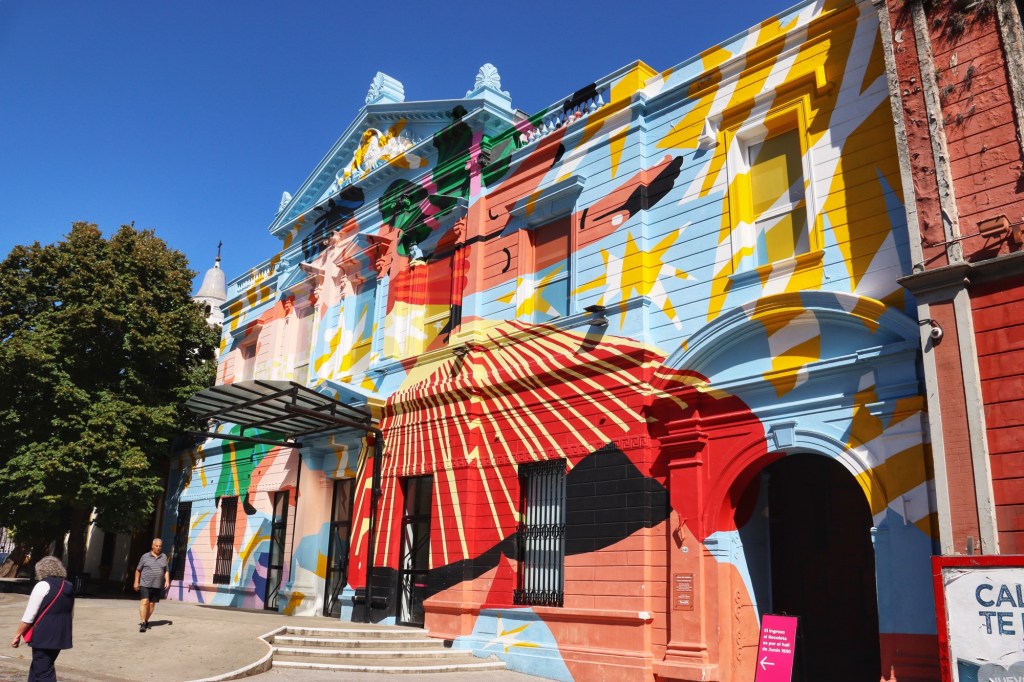
Argentina / Uruguay, in particular Buenos Aires and Montevideo, is a beautiful area, reminding me of California and Spain/Italy all rolled up in one. Argentina is undergoing some severe inflationary problems which casts some tension amongst the Argentines that could be sensed. Our British guide at the cemetery in Buenos Aires asked to be paid in US dollars, as he had to pay his landlord rent in US Dollars.

The Falkland Islands are so isolated, and I think it is reflected by the way I saw the residents interact. They were very welcoming to us, probably because of the money we bring in, and always nice. But it’s all a small-town vibe, and self-supporting. Seeing wild penguins interact for the first time was exhilarating and very humorous.

Patagonia (lower Argentina and Chile, plus Tiera del Fuego) is an amazingly rugged land where so many of the residents are transplanted from elsewhere in the world. There are very few of natives living in this area, mostly wiped out by the initial Spanish settlers, and then pretty much completed in the 19th century by the mining and whaling industries. One of the first peoples to be wiped out were the Yaghans living in Tiera del Fuego. They were skilled fishermen and seal hunters, using canoes to fish and hunt. What was interesting is that they didn’t wear clothes. They kept warm by coating their skin with seal blubber, and with constant campfires, even in the canoes (where Tierra del Fuego got its name). But the Spanish missionaries forced them to wear clothing, which got wet and then cold in the canoes, and made them more susceptible to illness (especially smallpox). Our second up close and personal experience with penguins in Punta Arenas was even better than the first. Tiera del Fuego is fairly desolate, with harsh weather and constant winds limiting what grows there. But hiking in Tiera del Fuego was wonderful, with that desolation showing as a natural beauty. In places, it was unworldly, like what we saw in Iceland.

Chile is an amazingly varied country. Running 4,000 miles down the Pacific coast with the Ande Mountains as its backbone, there is very little arable land along the coast. But what little land is available, it is used extensively. Similar to Argentina and Uruguay, Chile recruited settlers from Europe in both the 19th and 20th centuries, which gives the cities like Puerto Montt a very European flavor in architecture and cuisine. There is a big wealth gap visible in the cities, but that’s true in many of the U.S. cities as well. But the poverty level here is more extreme with the migration of millions from the inland mountains to the big cities such as Santiago seeking urban jobs instead of survival farming. The ship cruising through Glacier Alley and turning into the Pio XI glacier inlet gave us majestic views, better I think, than Alaska. Our trip to artists’ homes in Valipraso was certainly a highlight, giving us the opportunity to interact with the artists and their families.

Peru is a land of extremes. The coastal cities are literally in the middle of desert land. But inland, in the Andes Mountains and further east to the Amazon River basin it is rainforest or tropical. Evidence of past cultures and native nations is readily seen everywhere. Throughout Lima and especially in Cusco, the Spanish buildings are literally built on top of Inca ruins. The people themselves clearly have native bloodlines, mixed with the Spanish and to some extent the Africans brought in as slaves later. I was thrilled to see a rising pride and interest in their native heritage, recognizing the truly amazing civilizations that preceded the European invasion. Peru is actively seeking to restore some of the lost skills from their past. This was readily seen in Machu Picchu in restoring and studying the ruins and in Cusco such as at the Sulca Textile Museum recreating the textiles and clothing of the ancients. Like Chile, Peru is also a country with extremes in poverty and wealth, especially with the huge migration from the inland sustenance farming into the large cities. Lima, with a population of over 11 million, suffers from this continuing migration without any ability to properly manage it.
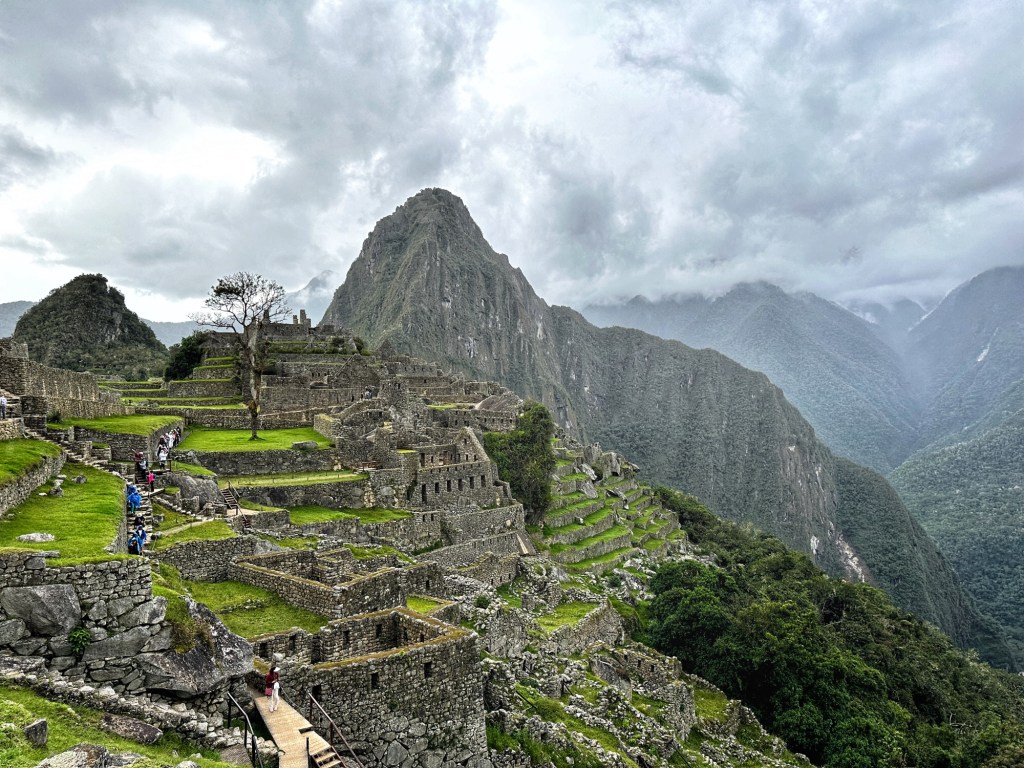
Machu Picchu is a treasure for the world. It portrays a story of an amazing civilization with sophisticated architects and engineers creating a sustainable city in a most unlikely location. It was an adventure of a lifetime to go to Machu Picchu, meaning it was challenging and thrilling at the same time. Not being healthy during that adventure did slow Laura and I down some but didn’t defeat us.
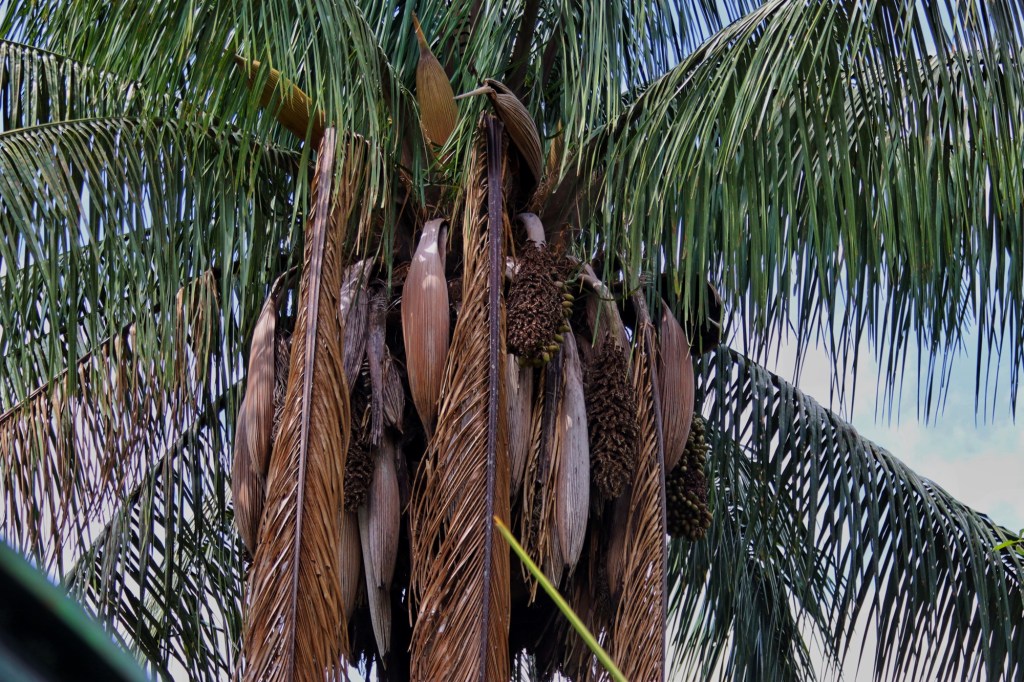
Ecuador and Panama seem to have done the best in having a stable economy, which in turn reduces the extreme poverty that exists elsewhere. This has enabled building booms in the cities and a vibrancy we didn’t see elsewhere. Interesting enough, it is the U.S. influences that enabled both economies. In the case of Ecuador, they adopted the U.S. dollar as their official currency, greatly reducing the huge swings in inflation and recession experienced in other South American countries. Panama, benefits from the Panama Canal, built by the U.S. and then handed over to Panama after 99 years to operate and maintain. Our trip to the Balboa Rainforest Reserve was a great way to be exposed to the diversity of plant and animals in this tropical rainforest.

The Panama Canal was as an amazing engineering feat as Machu Picchu, for different reasons. The sheer size and magnitude of the Panama Canal can be overwhelming. The geek in me loved watching the lock operations each time. And from the narration Holland America provided throughout the day, I came to appreciate the challenges be faced now – fresh water shortage, larger ships and maintenance needed to keep the canal operational.
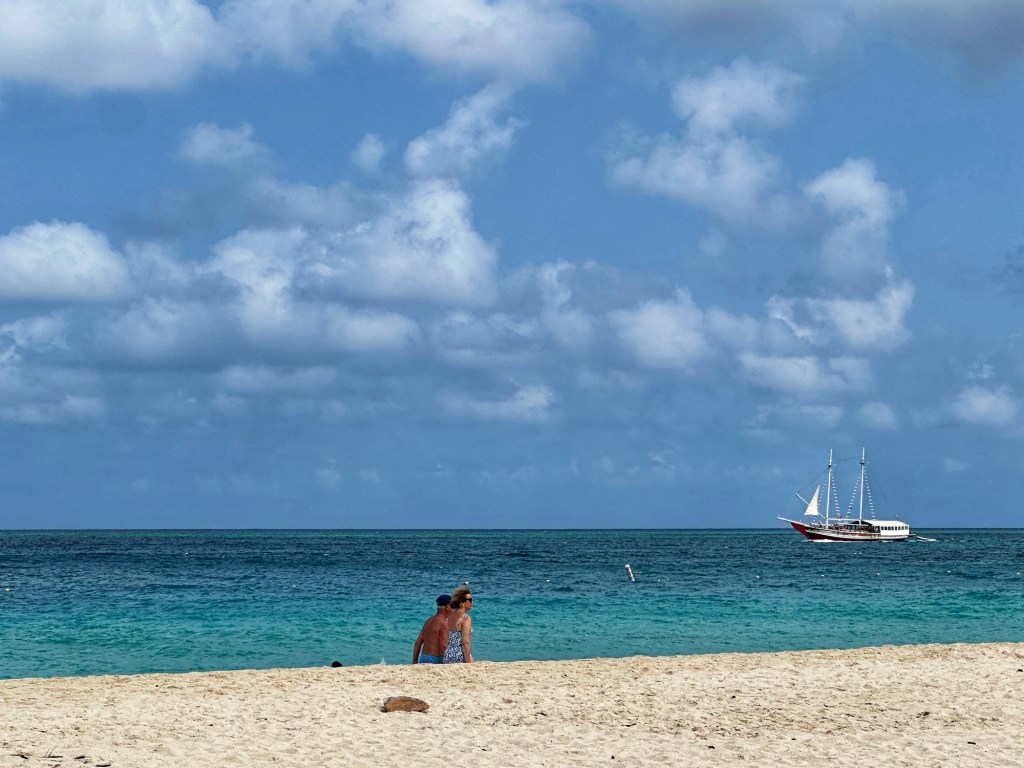
Aruba’s tourism motto is “One Happy Island.” How true. I truly want to go back to Aruba and spend some time there. It’s different from the other Caribbean islands I’ve been to. I don’t know why, but it’s different.
Holland Ameria Oosterdam ship life was one of outstanding service and culinary excellence. We ended up really enjoying the days at sea, so except for one time, we had at least one sea day between each port stop. This allowed us to relax and recover after almost all days at port where you tended to get up earlier and had a fairly structure day of activities. Some caveats about Holland America, and our cruise in particular.
- Holland America caters to an older (okay, elderly) customer base. Laura and I were probably in the youngest age quartile. Ship activities are therefore geared for this age group, and most did not interest me since I don’t feel old or retired. I wasn’t ready to get into Origami classes, dance lessons, Bingo, and lther similar activities. And there was some passengers that just shouldn’t have been aboard. They couldn’t get on/off tender boats, were limited in the excursions they could take, and needed special handling by the crew. I was only aware of maybe 2 or 3 children on board for each cruise segment.
- What should have been the best outdoor spot on the ship, the Aft Sea View deck and bar was the only HAL designated smoking area on the ship. With a significant European passenger population, who seem to still mostly smoke, we couldn’t sit in that area both near the bar and under cover because of the smoke smell. And on the other side, the tables under cover in the shade seemed to be always taken by elderly couples constantly playing cards or dominos. Lounges and tables in the full sun were really all we could use.
- HAL dining was with few exceptions, outstanding. We enjoyed just about every meal and some were truly outstanding. With 30+ days of dining, there was sufficient variety in the menu each day to not get bored with menu options.
- While I admit having a Neptune suite and all the extra benefits it came with, spoiled Laura and I, the dedicated concierge for Neptune Suites, Patrick, was a godsend. As I’ve mentioned previously, Patrick often had a knack for anticipating our needs, and would go out of his way to assist us in medical support, special room service for when we stayed in our cabin all day, and advice for things to do ashore. So thank you , Patrick.
- Foreign currency proved not to be a problem. Argentina and Uruguay were urban enough where we went to either accept credit cards or took US dollars. The Falkland Islands was similar, given their reliance on cruise ship visitors. I did purchase some Chilean Pesos and Peruvian Soles to cover small purchases with vendors and shops, but all large purchases we used credit card or US dollars.
All in all, this trip was an adventure of a lifetime, and I loved it. I return with a greater appreciation for what we have, and a better understanding of the struggles in the rest of the world. What a great way to get exposed to so many different cultures, cuisine and natural beauty in just a month.
 Menu
Menu 
Leave a comment