


Today was a thrill, going through the Panama Canal. It is quite an impressive engineering site to see.
We went to bed the night before with a tentative ship schedule to be in the queue to enter the canal at 6:30AM. but when we woke up at 6:30, we had already entered the canal and gone under the Americas Bridge, heading toward the first set of locks, the Milaflores locks. So, we missed the first of 3 bridges.
First some background. I won’t go into the detailed history of Panama and the Canal. Just to say, the French failed miserably in their attempt to build a canal modeled after their Suez canal, losing 20k men to malaria. The U.S. attempt around 1911 was better engineered and they first tackled how to battle malaria by first identifying mosquitos as the source, eradicated most mosquitos (unfortunately using DDT), and then a medical cure for malaria. The Corp of Engineers design was to create a lake in the center of Panama, Gatún Lake, by damming the Chagres River. They then needed 2 sets of locks on the Pacific side to get up to the lake water level of 85’ above sea level and 1 set of locks on the Atlantic side. In addition, the Culebra Cut was dug through the continental divide that is about 8 miles long. That’s the canal in a nutshell. In 2016, there was an expansion of additional sets of locks on both ends to handle the larger container ships. I’ve posted the map and guide sheet we were provided as a reference.
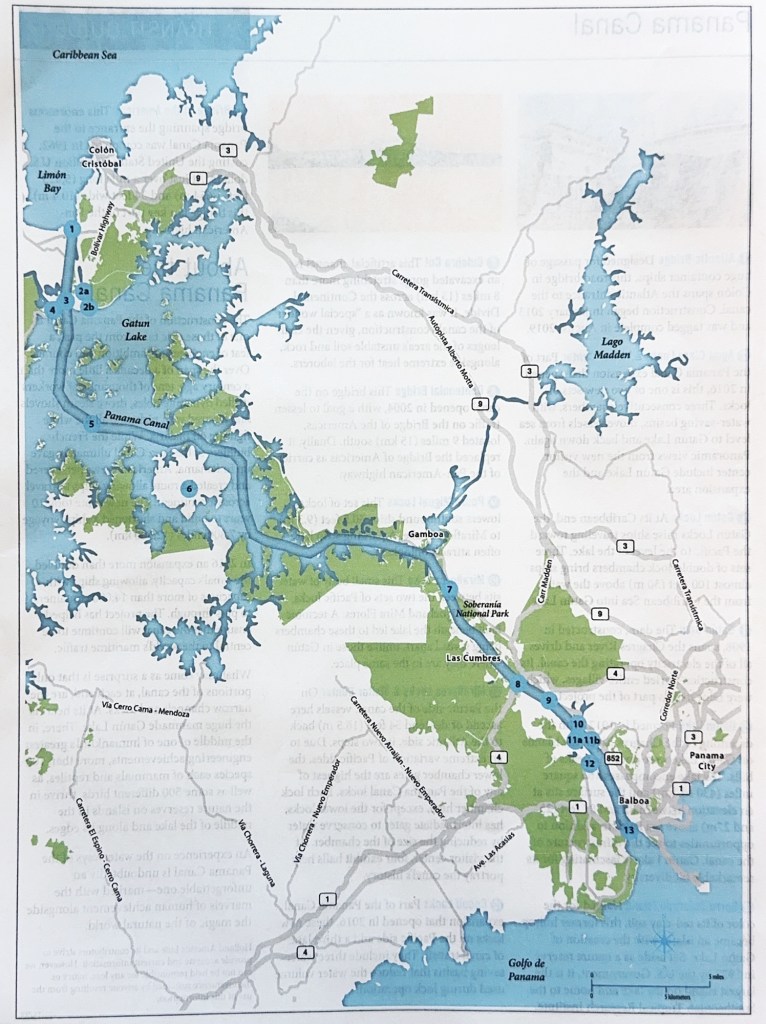

A set of locks consist of one or more chambers to raise/lower ships. For the original sets of locks, that meant two parallel lock sets allowing two ships going through at the same time. The new larger lock sets are for a single ship at a time. Prior to last year, the Canal handled an average of 35 ships a day. With the drought of the last year, impacting the availability of fresh water in the Gatún Lake for lock use and hydro-electricity from the Gatún dam used to power the Canal operations, its been reduced to an average of 25 ships per day.
We’re told the costs for a canal transit are based on ship size and amount of cargo. So a cruise ship such as ours could cost around $20k. A large container ship could cost over $250k.
So our journey starts with the Miraflores locks. This is a two chamber lock set. We followed a turquoise auto-carrier ship most of the way through and you see them ahead of us in this first set of pictures. These were all taken from our balcony on the right side.

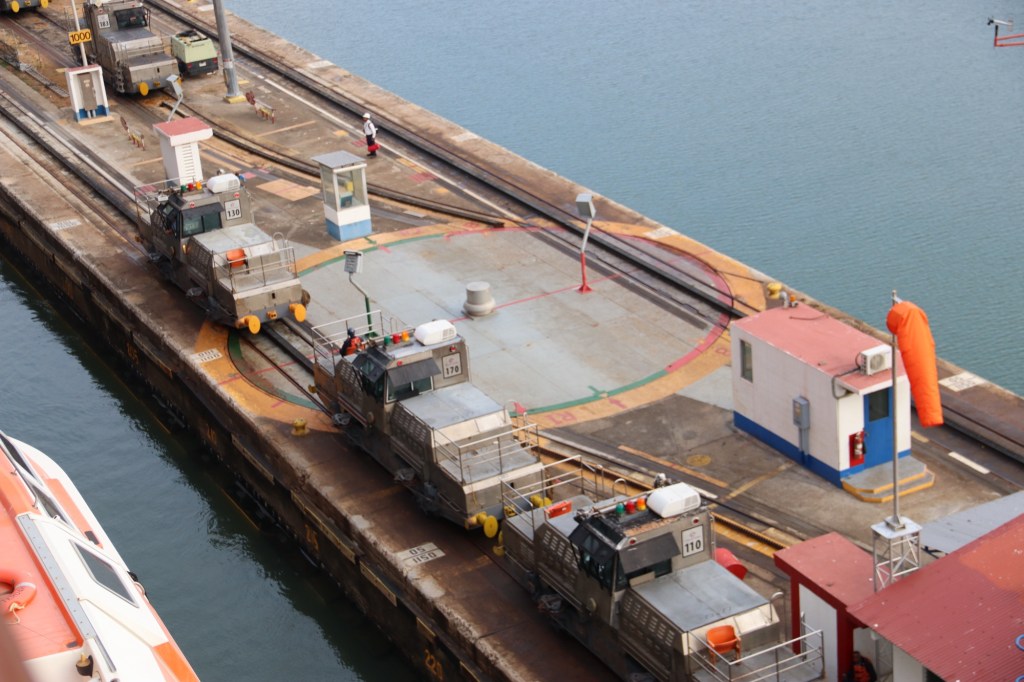


The ship powers itself through the locks, with a Canal Pilot controlling the power and rudders. There are electric “mules” on tracks that have cables from the ship attached so it can guide the ship so as not hit the canal sides. There are two mules used on either side of the ship through the locks. We went to eat a quick breakfast while the ship rose up in the second lock chamber.
Next we come to the Pedro Miguel locks. This is a single chamber lock set for two ships in parallel. At this point, I’ve mode to the bow balcony on our deck 7. Laura is watching from inside the cabin on TV Bow camera.
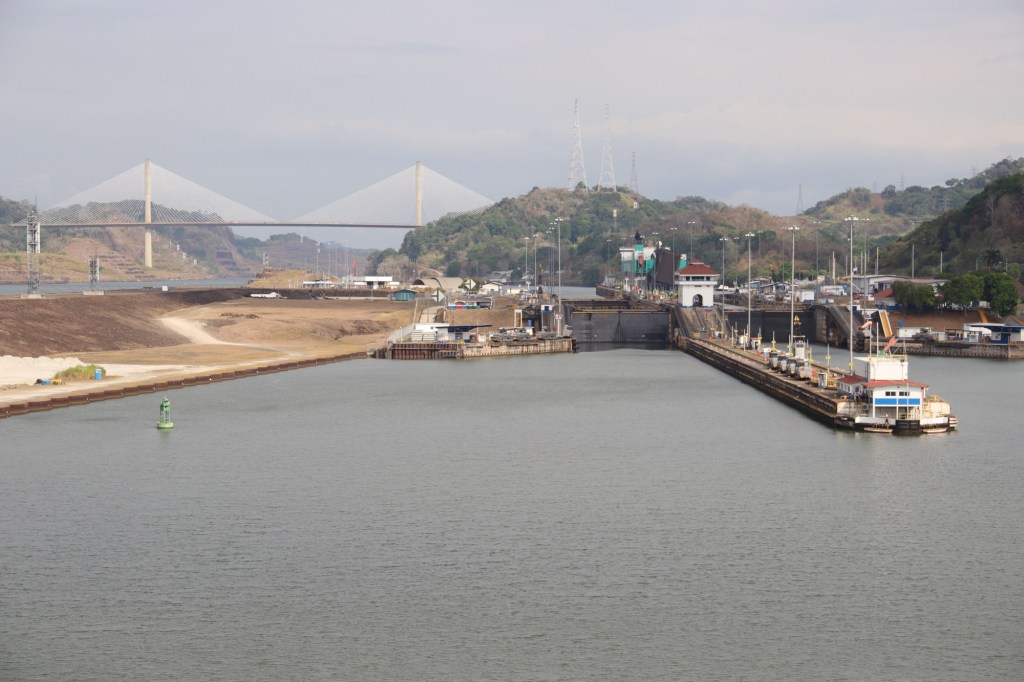


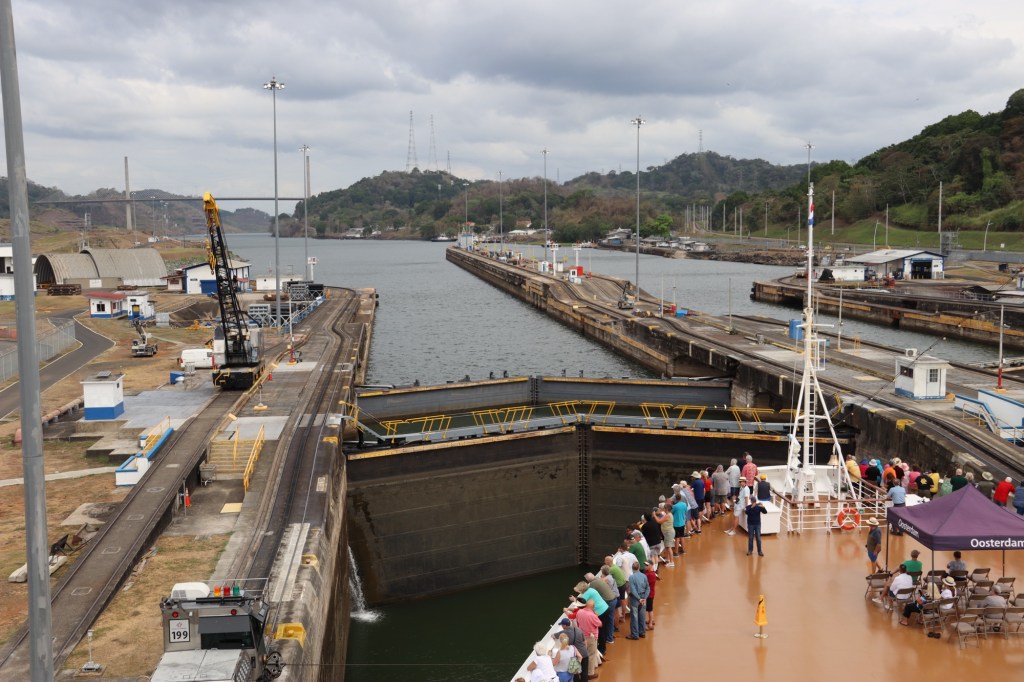


From Centennial Bridge we enter the Culebra Cut, which connects to Gatún Lake. There was apparently technical challenges in securing the cuts due to the unstable soil. The cuts are terraced to help with this challenge.
Gatún Lake has a lot of islands, which are the tops of the mountains flooded by the lake. It has become a popular boating, fishing and recreation area.

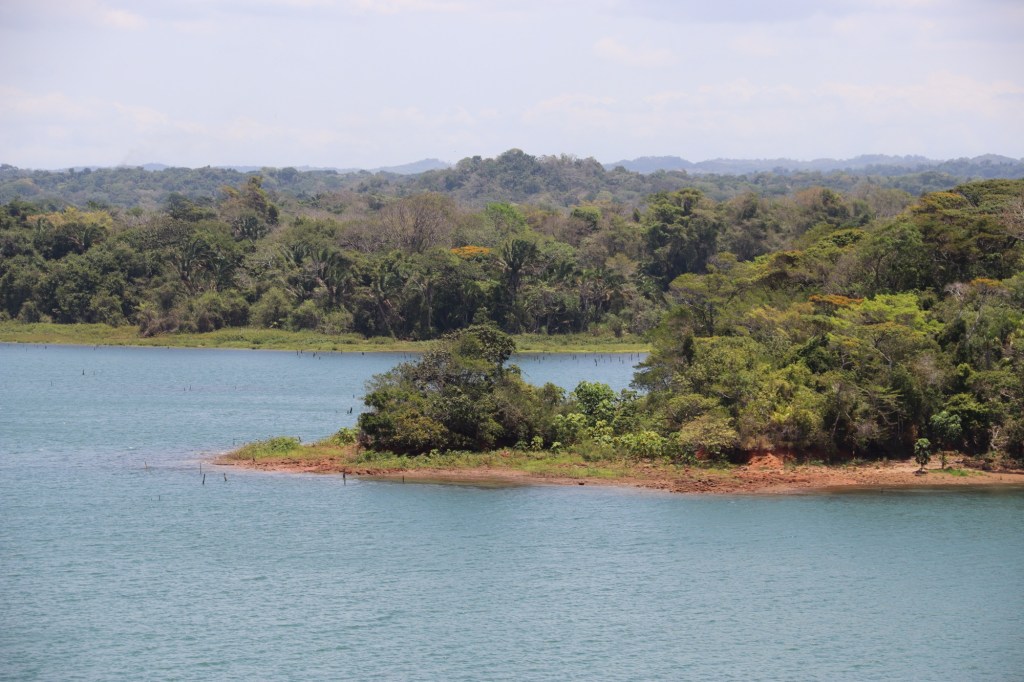

As we reach the north side of Gatún Lake, we pass the Gatún dam on the left which formed the lake. This dam provides the power for most Canal operations.
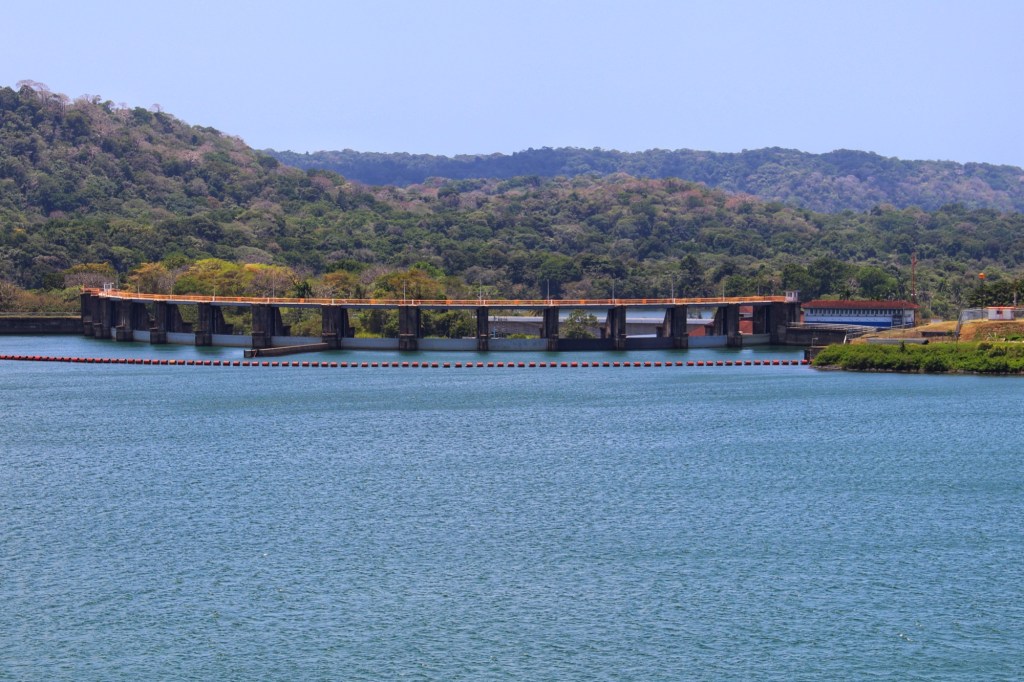
We are making great time through the canal. Not many other ships on the canal with us. There is the car carrier in front of us, one of the huge container ships running parallel to to us in the new larger locks and canal, and as we approach the Gatún Locks, we have another ship coming in the opposite direction.
These are sets of locks that bring us down to the Atlantic / Caribbean water levels. This is the Gatún Locks, with a pair of triple chambers. By this time, I have moved to the front bow balcony on the 7th deck to take pictures.


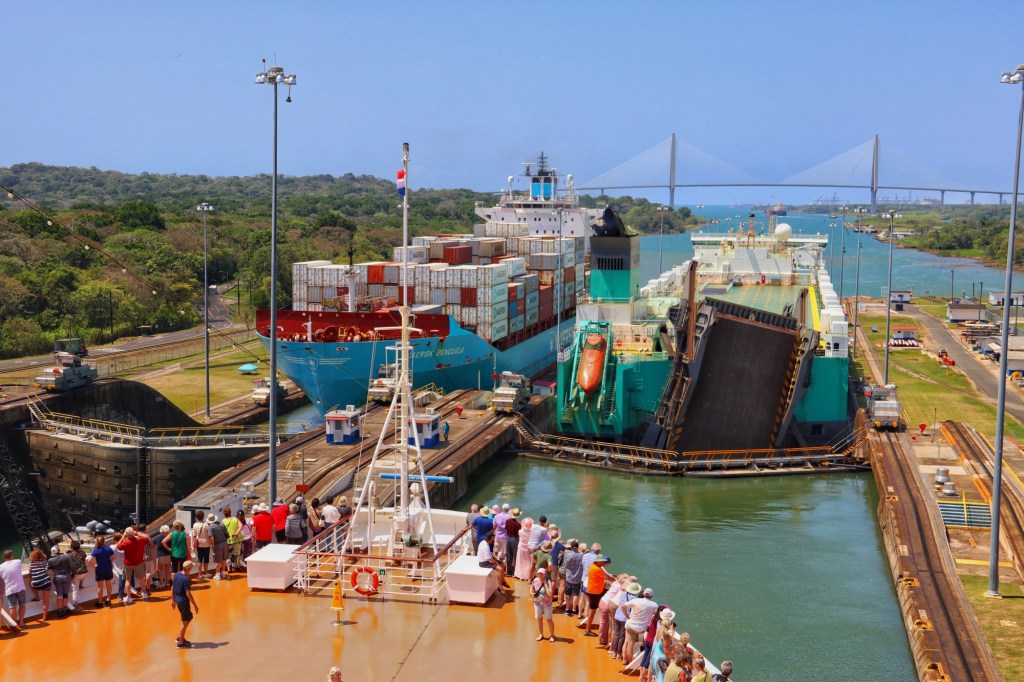


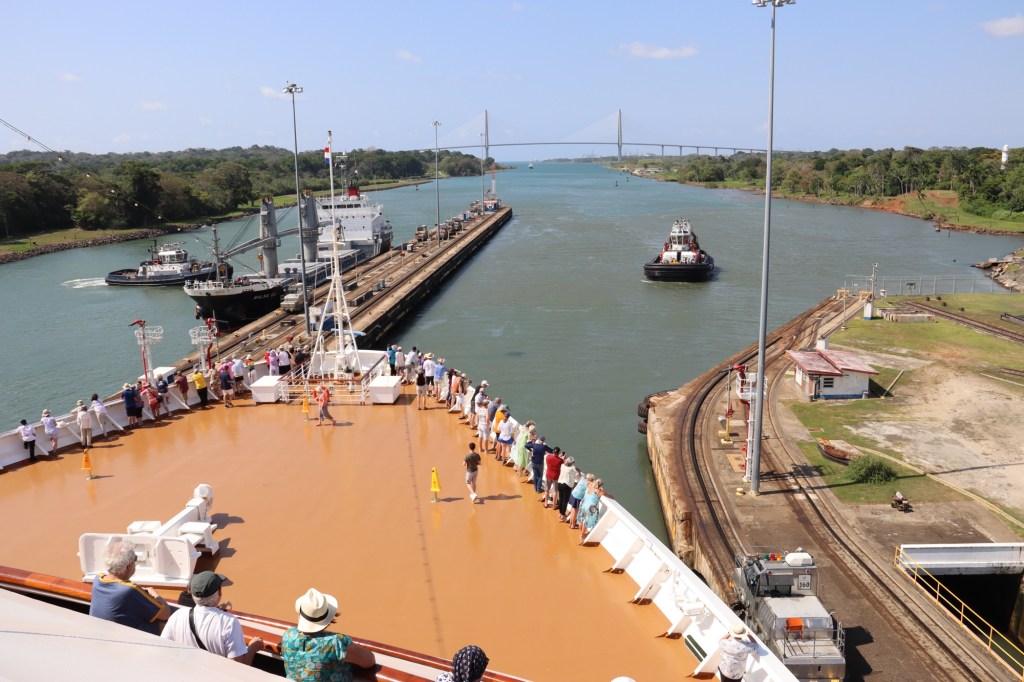
The Atlantic Bridge is off in the distance ahead of us. i. The video below, you can see the electric mule running beside us.
This next video shows us being lowered in the last lock chamber to sea level, with the water being discharged into the canal in front of us.
As we finish traversing the canal, we first go under the Atlantic Bridge, probably the prettiest of the three. We enter the Caribbean Sea at the port city of Colón, Panama.
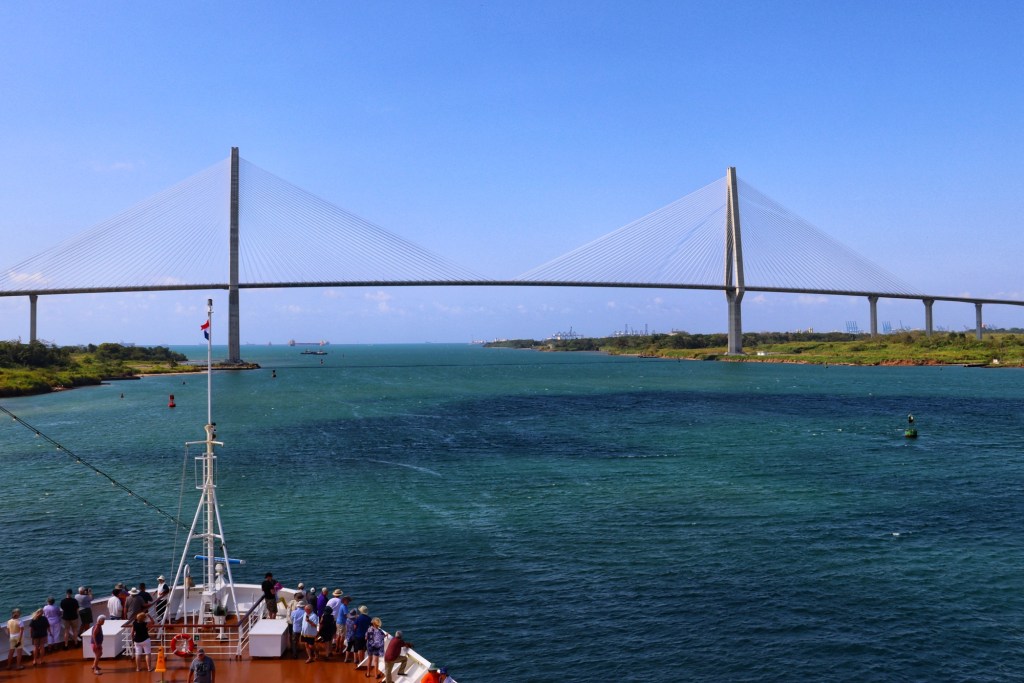
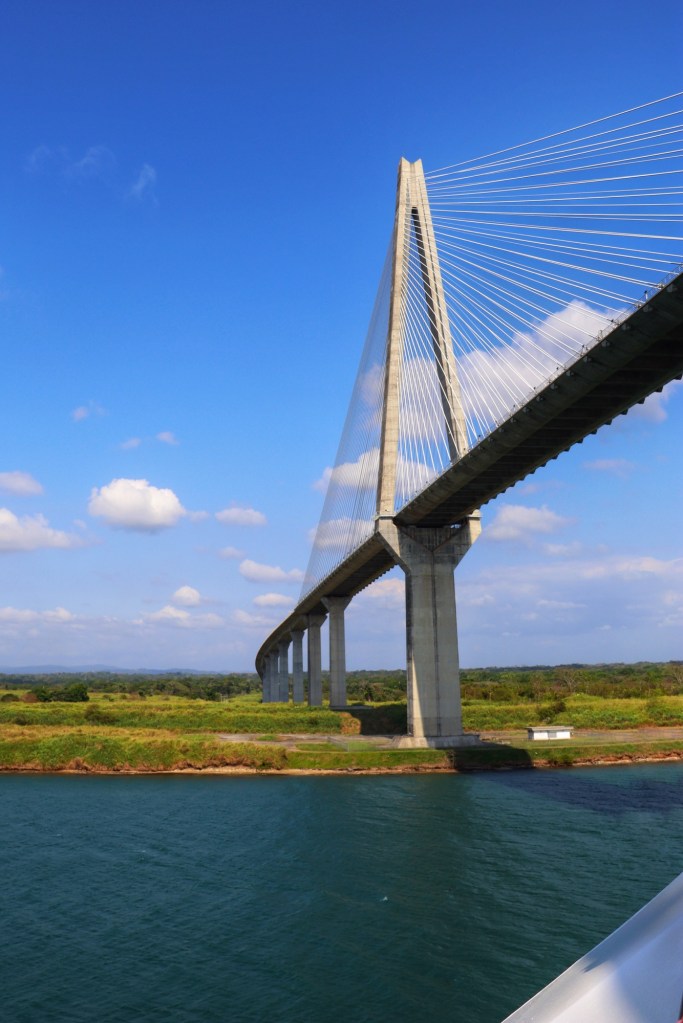
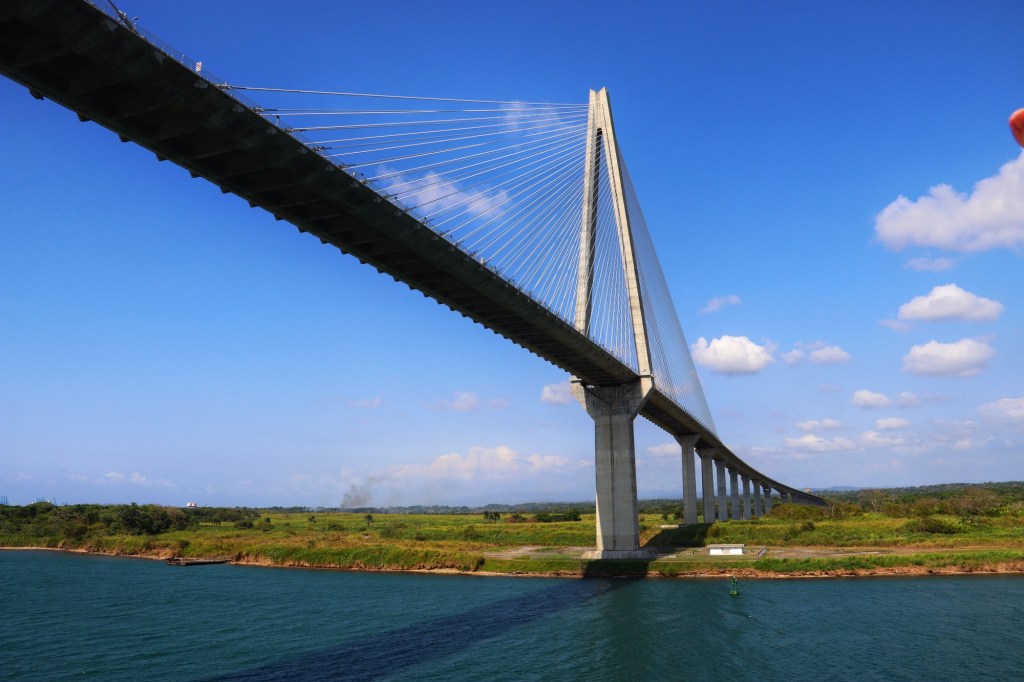
It took about 8 hours to go from the Pacific Ocean to the Caribbean Sea through the Panama Canal, a far cry from the 3 weeks to go around South America. I was so impressed with some of the engineering that went into to the original canal. Later improvements were equally impressive – the intermediate gates you saw in some of the lock chambers that reduce the amount of water to fill the chamber for ships not needing the full length. I’d rate this day a 10 based on what we saw, how it was explained, and the clear enthusiasm we saw from the Canal employees working the locks. They’d wave to us, ring the mule bells and honk tugboat horns for us.

 Menu
Menu 
Leave a comment