


Machu Picchu means “Old Peak”. It is believed to have been a royal estate or sacred religious site for Inca leaders, whose civilization was virtually wiped out by Spanish invaders in the 16th century. For hundreds of years, until the American archaeologist Hiram Bingham stumbled upon it in 1911, the abandoned city’s existence was a secret known only to peasants living in the region. As a residence for the elite, there was a whole city of supporting services – farming, textiles, religious, pottery, building, architects, defense, and so on. Our guide even went so far as to suggest its purpose was as an elite education site. What I find interesting is how no one has found any significant treasures such as gold or silver that were prevalent at other Inca sites that the Spanish were so intent in taking. Some has been found within burials, but not much. Was it all looted without anyone finding out, or was it relocated by the Incas as their population collapsed with the arrival of the Spaniards? That is just one of the many mysteries of this place.

Machu Picchu is within the cloud forest region of the Peruvian Mountains. It has lush tropical foliage such as orchids, cacao bushes and lots of vines. Temperature range stays mild during the rainy season Dec-Mar and a little cooler during the dry season the rest of the year. Only ~50% of the Sanctuary has been uncovered. The rest remains still hidden within the forest growth. Insects and birds are present, and llamas run wild within the Sanctuary.
Upon entering, you immediately need to climb up. Straight ahead is really the exit path from about the Main Square level. Our group had 3 guides assigned and they warned us there would be some steps up, but that we could take them slow. What an understatement! We immediately stripped at least one layer of clothing off, given the mild temperature and seeing the stone steps up. Laura, still recovering from Bronchitis treated the previous week, struggled with the steps as her breathing was easily made labored. We would take a dozen or so steps up, then rest for several minutes as she coughed from the irritation in her lungs and throat. As for me, I still had not recovered from the loss of stamina from the higher altitudes. In the end, the guides decides that one guide would stay with us and let the rest of the group go ahead. This turned out great for us, our own private guide. Donny is a free lance guide, hired by the Hiram Bingham company.
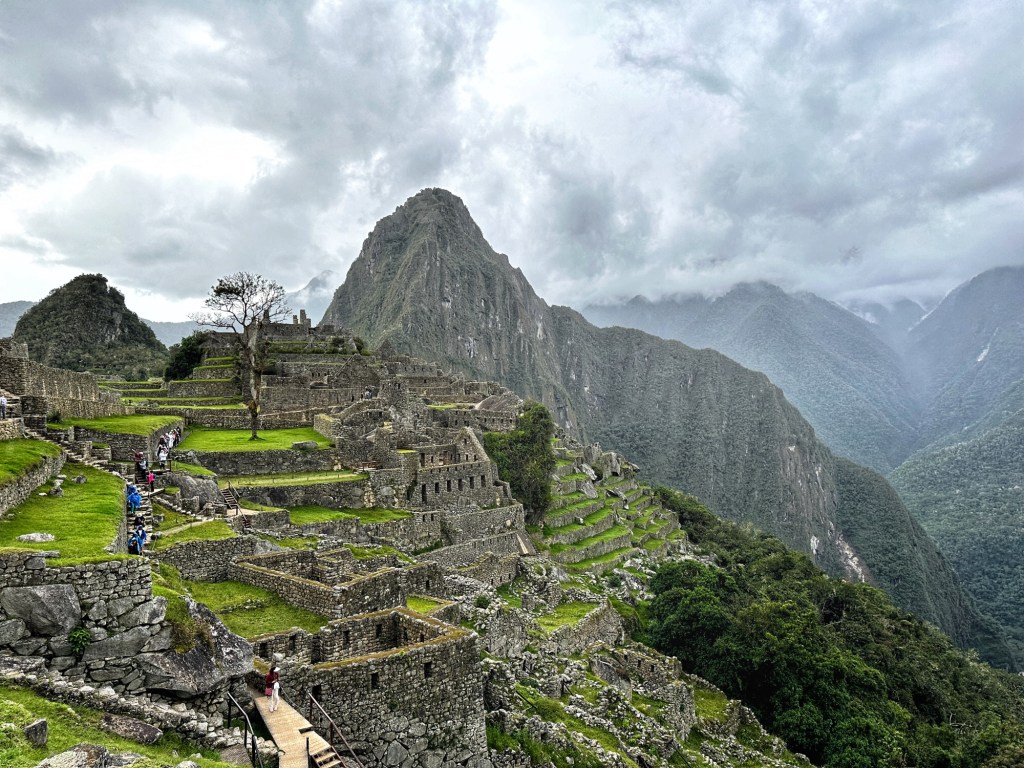
After about seven or eight levels of steps, each for a terrace level, we reached the mid-level observation terrace that looks over the main city. Others had gone higher up, but this was sufficient for us. This is your first sight of that famous iconic view of the ruins with the Machu Picchu peak looming behind.

Donny stated the stone for all the buildings was quarried from the tops of the mountains, allowing the stone to slide or roll down to where it was to be used. No need to develop techniques to get stones uphill.
The city is divided into 5 main areas. Upper left terraces were non-noble housing, lower right housing was noble housing, temples and the main square bisected the two, in the far upper terraces were special temples and a high sundial (never completed), and the far lower terraces was the industrial area.

Normal housing had the typical stone and mortar construction, with thatched roofs
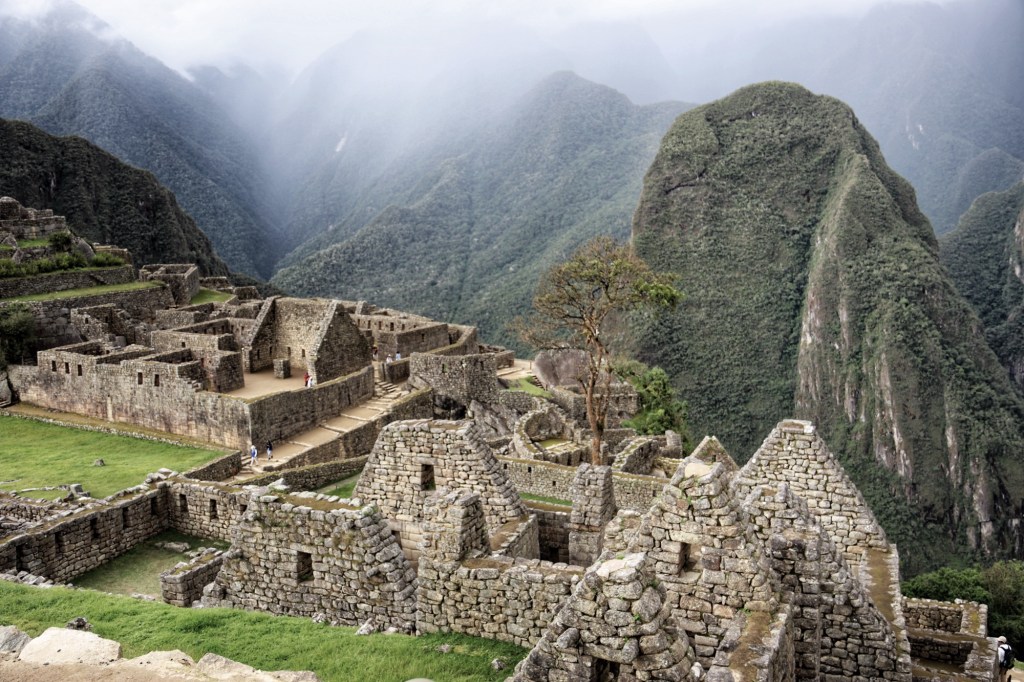
The noble homes are larger, more elaborate. Some of the highest ranked homes have at least a foundation of mortarless stone (see far left of picture). This is where the stones are cut so precisely there is no gaps between the stones and no mortar used. This makes for a earthquake proof structure, as the walls are all the same density material and vibrate in unison.
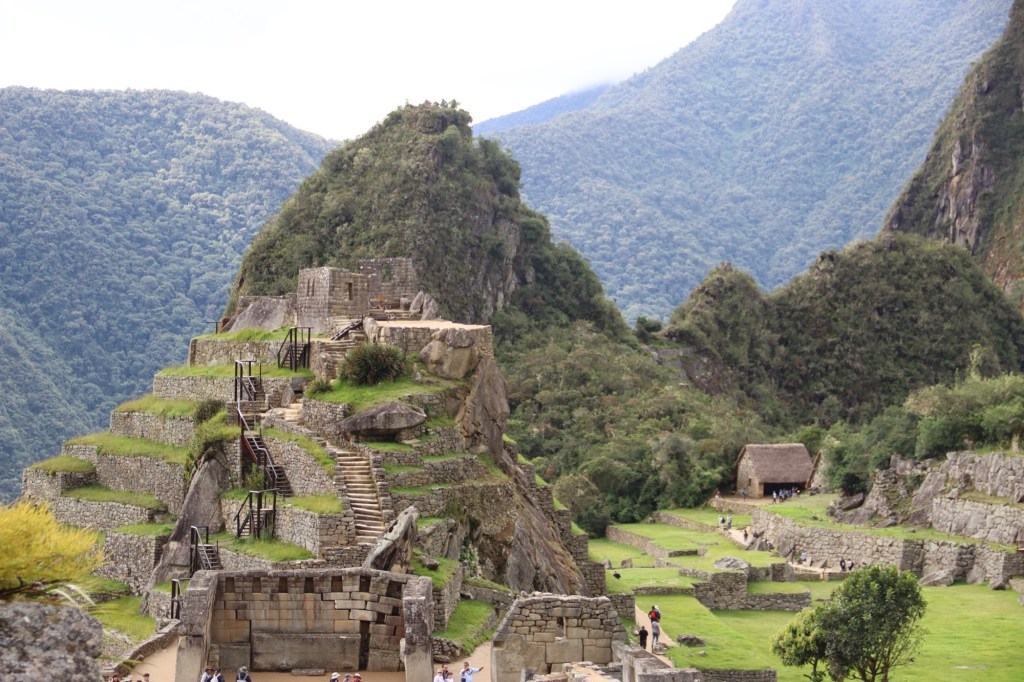
This hill is a Sun Temple meant to house an elaborate sundial. It was never completed as some of the terraces on one side are not carved out yet.

The industrial section concentrated the various craftsmen, textile and other manufacturing. I suspect it. Kept smoke, wastes and risk of fire away from the other city sections

The main square was where the people gathered for religious events and to hear the king speak. Apparently, the acoustics are such that you can hear someone speak from one end to the other.

Crops were grown and livestock grazed on the terraced land around most of the remaining mountain side not developed for the city. Irrigations systems were built in into the terraces. Much of the terraces farmland remains hidden in cloud forest overgrowth.

What is not easily apparent is that almost all the surrounding mountains have buildings and terraces at their tops, including Machu Picchu peak. You can see the buildings on the ridges and make out terraces. Our guide, Donny, had taken a few people just yesterday up this peak. He says there are narrow steps built into the sides and cables to grab as you climb up and down. I’ll pass.
Here is a gallery of a few additional pictures within Machu Picchu.
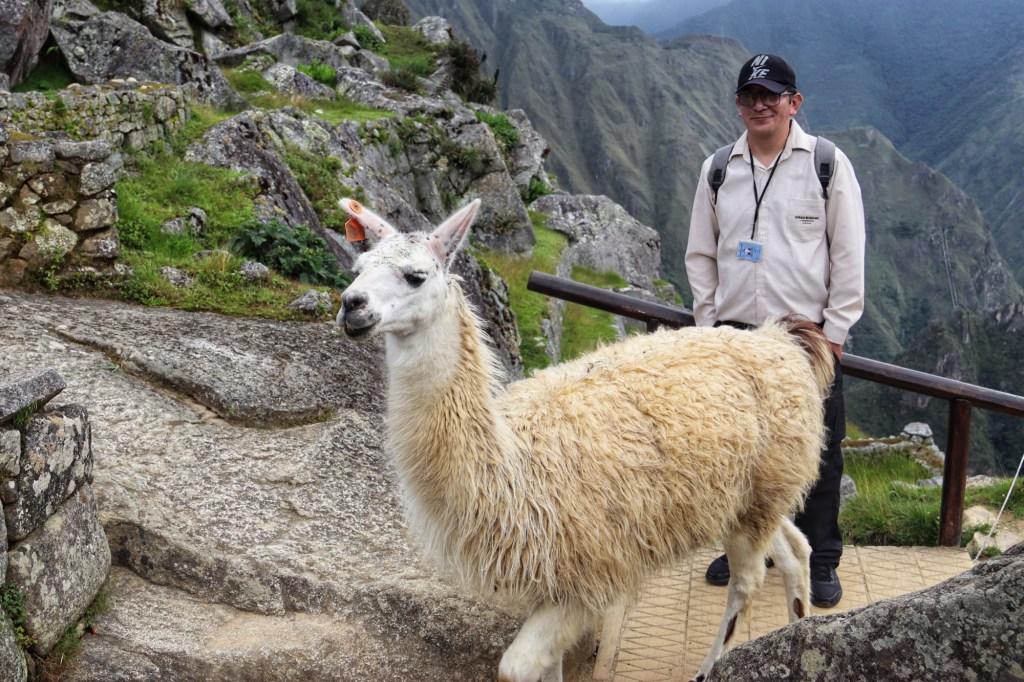


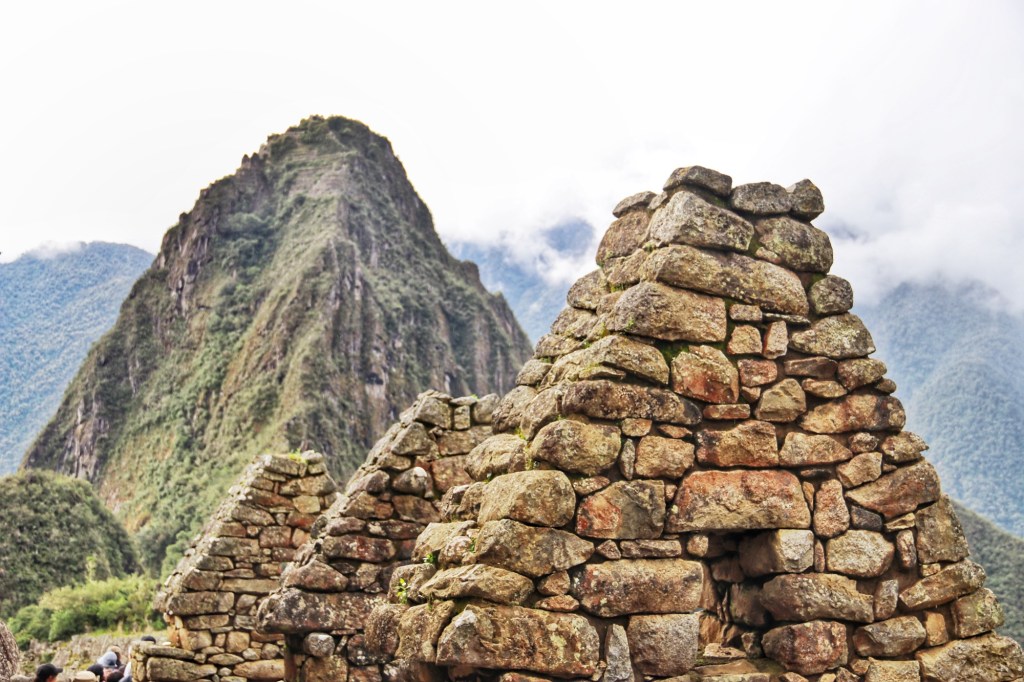


Upon catching up with the rest of group who had ventured further, we headed to the exit (no steps up!) and walked a short distance to the hotel at the Sanctuary entrance for refreshments. From there we boarded busses to take us down to the train station, and boarded the same train we arrived on. Dinner was served on the train, though I noticed there was not as much drinking as earlier in the day. Everyone was pretty exhausted. The final 90-minute bus ride back to Cusco was in the dark and very quiet, except for the discussion on adjusting the next day’s itinerary to allow for some optional shopping and seeing some Alpacas. Once in our room at 10:30PM, I took a relaxing shower before passing out on the bed to sleep. What a day!
 Menu
Menu 
Leave a comment