


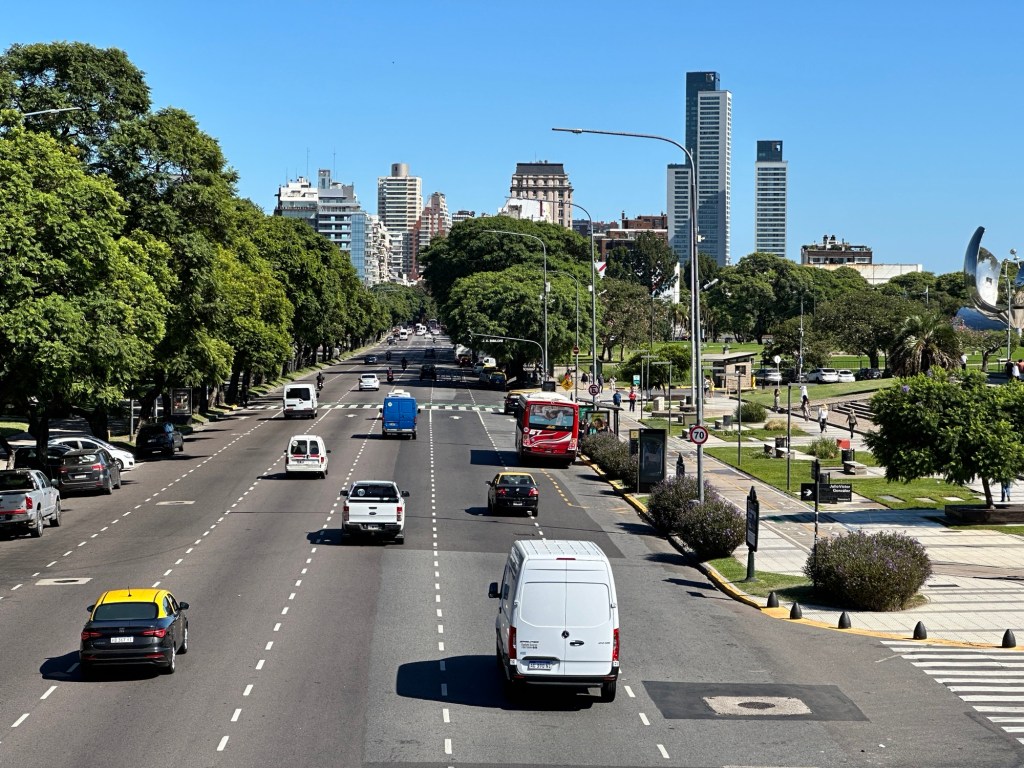
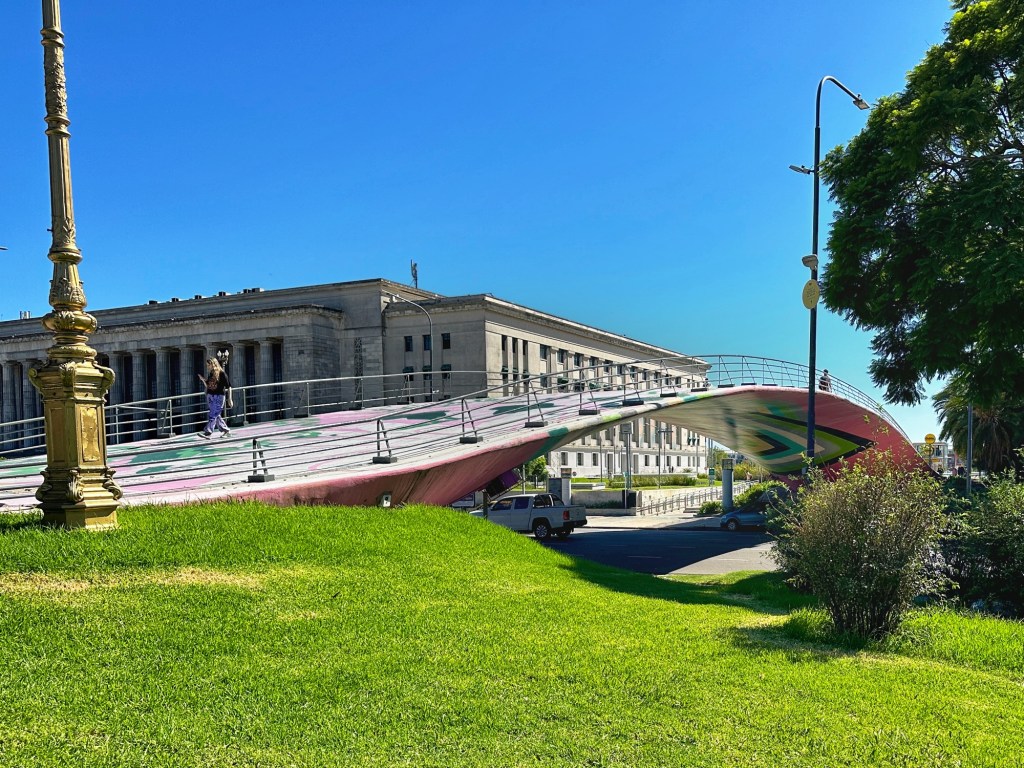
We adventured into the city mid-morning, setting our sites on some of the parks and other nearby sites. Started at a northern point and then worked out way somewhat southward. Took a cab to Floralis Genérica park area where there is a large floral sculpture. Unfortunately the entire park was closed! Gates locked at all entrances. Quite a few tour groups around, were equally surprised, many taking selfies through the metal fence.

With its reflective metallic surface, I was hoping to get some fun shots similar to what is done at The Bean in Chicago.
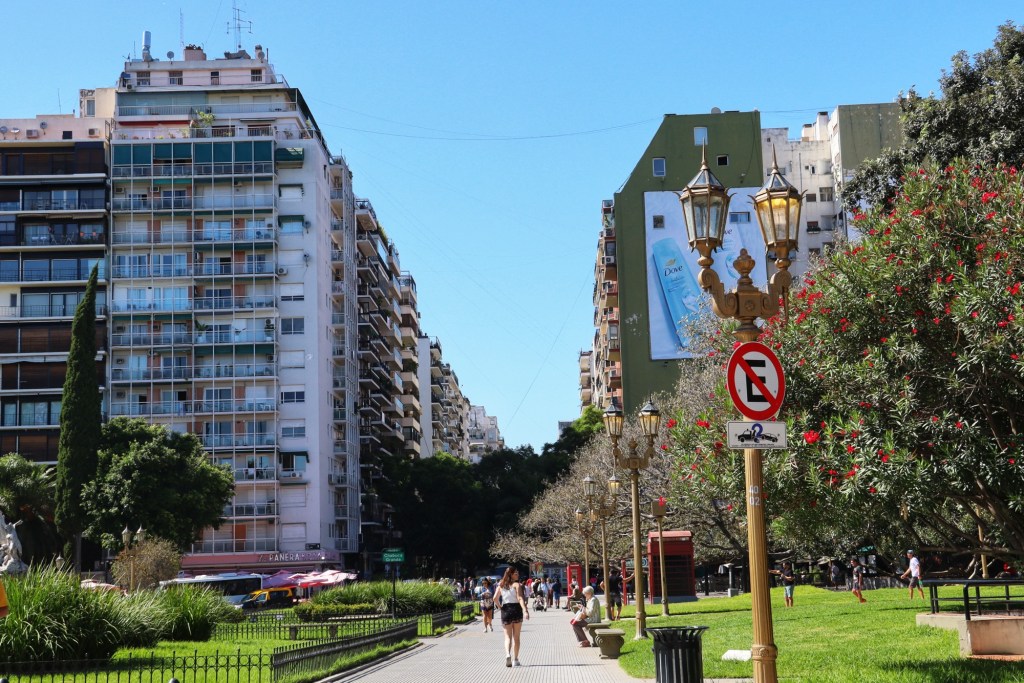
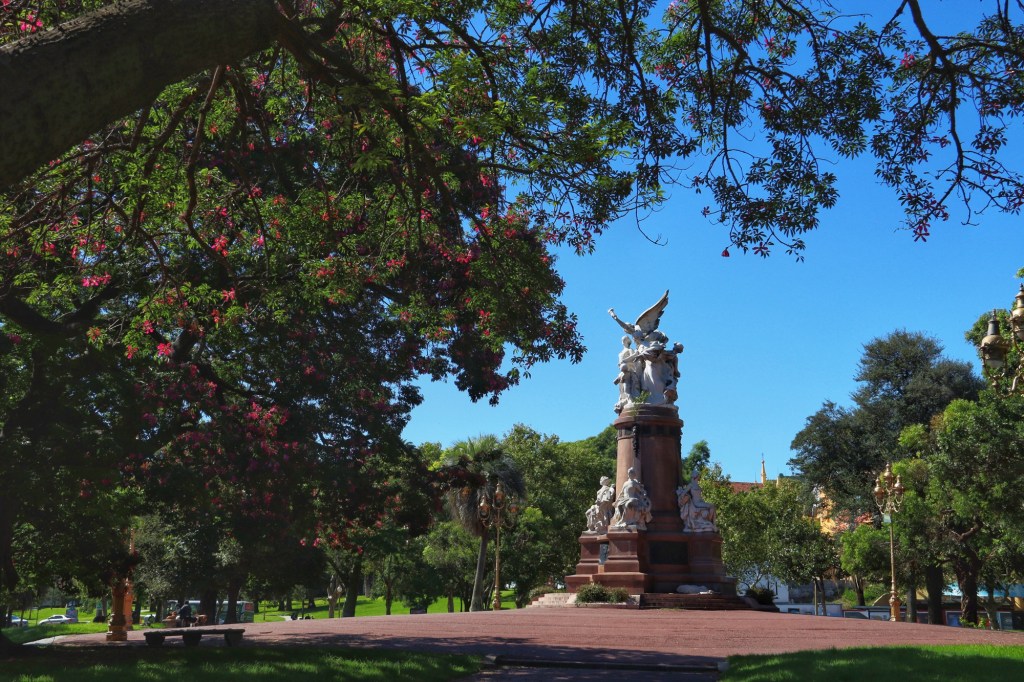
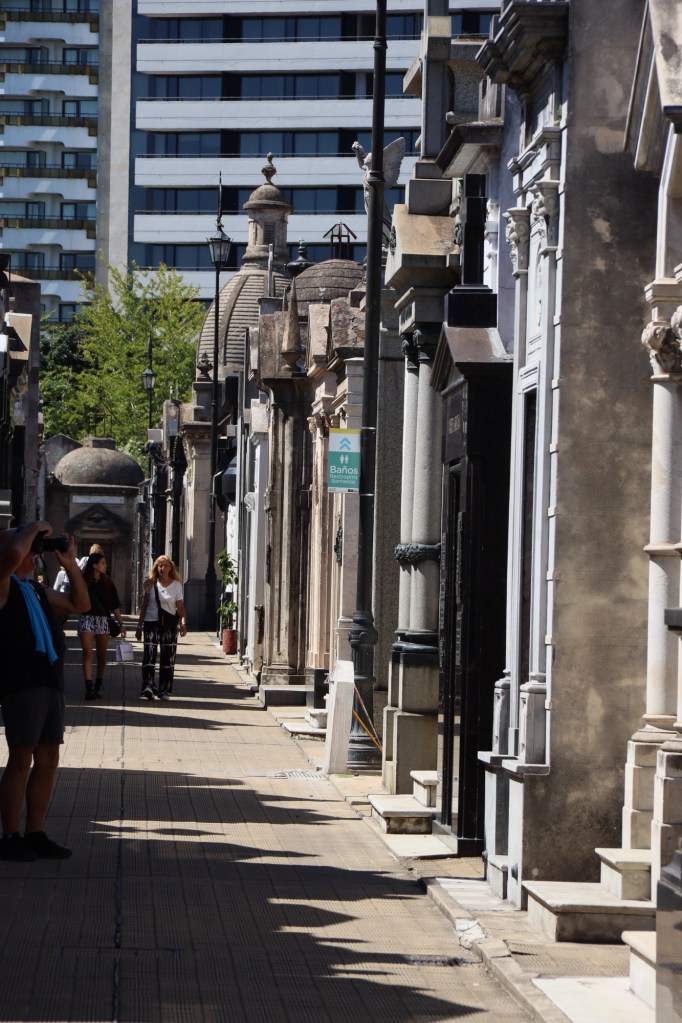
We didn’t try to walk around to the rose gardens behind in fear of it also being closed, so we proceeded to Plaza Francia park, and thru the lovely Recoleta neighborhood to the historic Recoleta Cemetery.
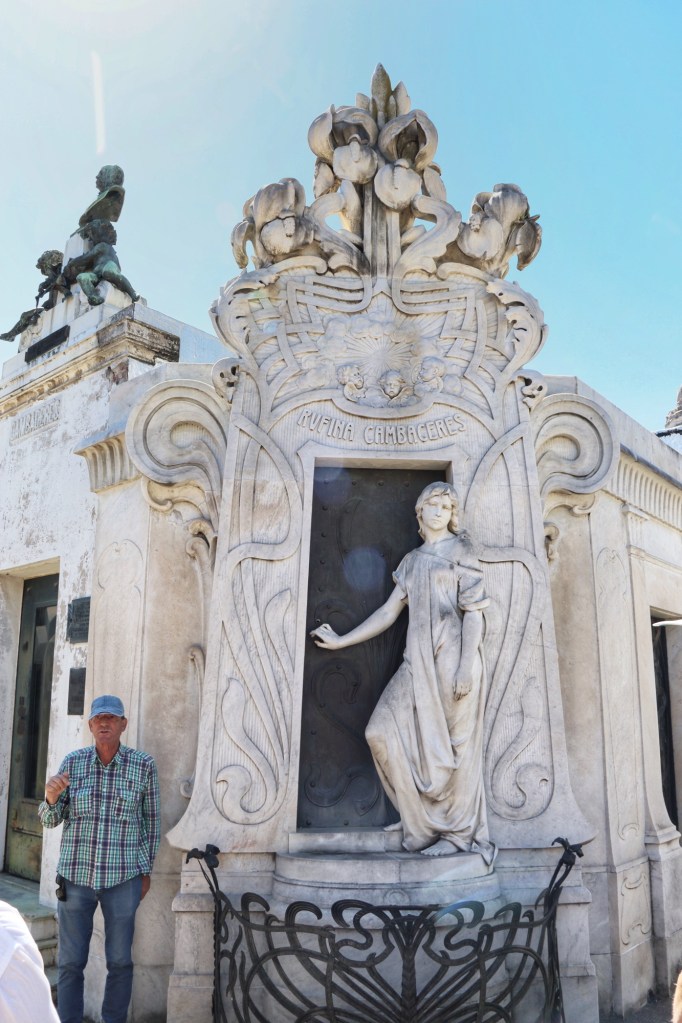
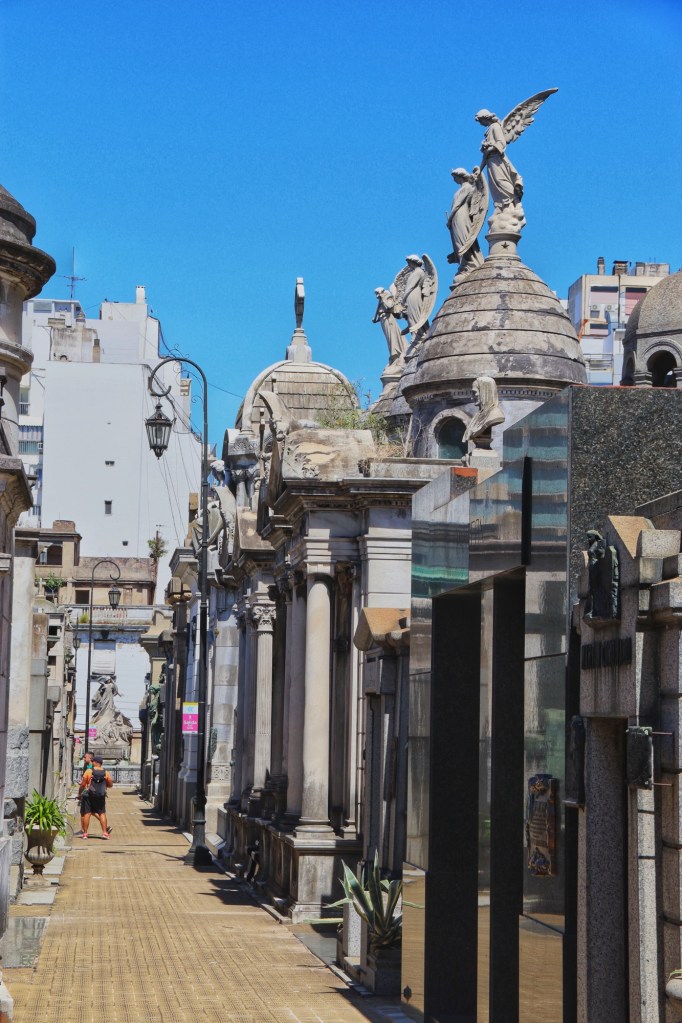
Recoleta Cemetery is several hundred years old, known for its elaborate mausoleums of the Argentine rich and famous., although now it is a public cemetery. As we entered into Recoleta, a gentleman approached us asked if we wanted to join a tour group. We agreed and joined maybe 5 other couples. The guide introduced himself as Simon, from East Bourne, England. Simon’s 75 minute tour seemingly wandered around the cemetery, repeatedly stopping at selected sites to tell us a story about that mausoleum. For example, there’s the story of Rufina. She was a girl of around 19 years who suffered from Catatonic Epilepsy. She apparently had a seizure that was evaluated by three different physicians who all determined her deceased. Her body was placed in a coffin and put in the family mausoleum in advance of her funeral. Later one night, workmen heard noises and notified the family for fear the coffin was being robbed of jewelry Rufina was buried with. The family arrived, found nothing, but with concerns about her fatal seizure, had the coffin opened. They found bruises to the top of her hands and the underside of the coffin lid scratched. So yes, Rufina had been buried alive but died sometime later after a period of revival from the seizure. Heartbroken, the family had a new mausoleum built memorizing Rufina, with a stone sculpture of her opening a door.
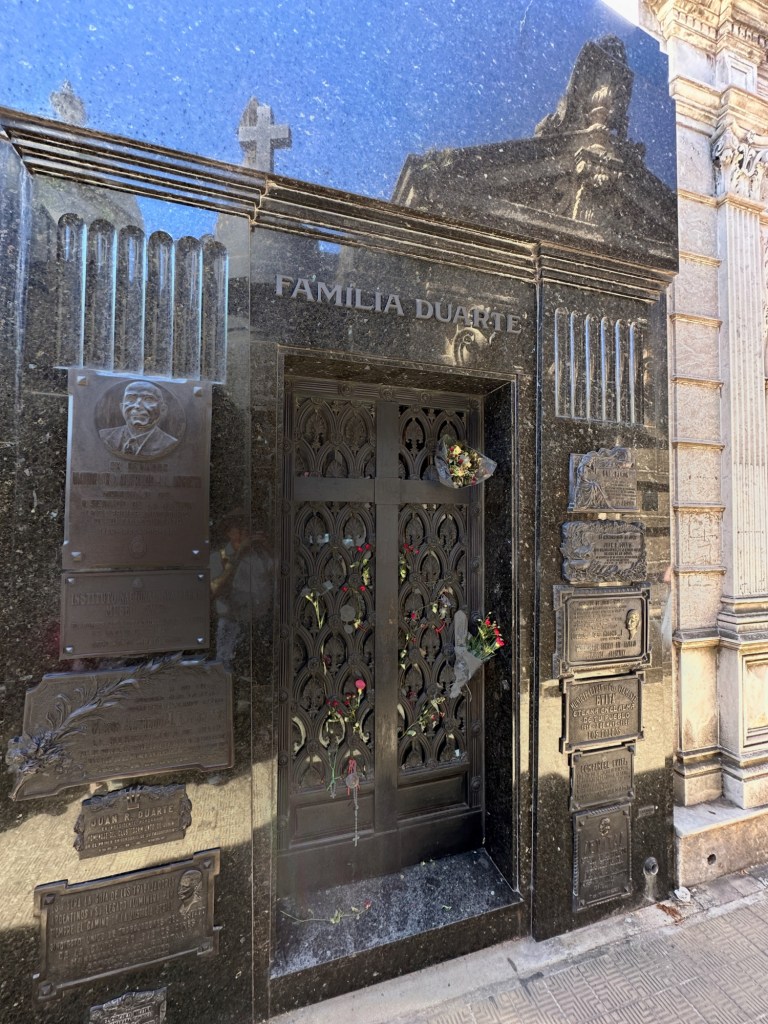
Evita Peron is also buried here, but it was a long journey for her remains to get here, as told by Simon. I won’t try to repeat the story, but she is in her father’s family mausoleum, under the name family name Duarte, not Peron.
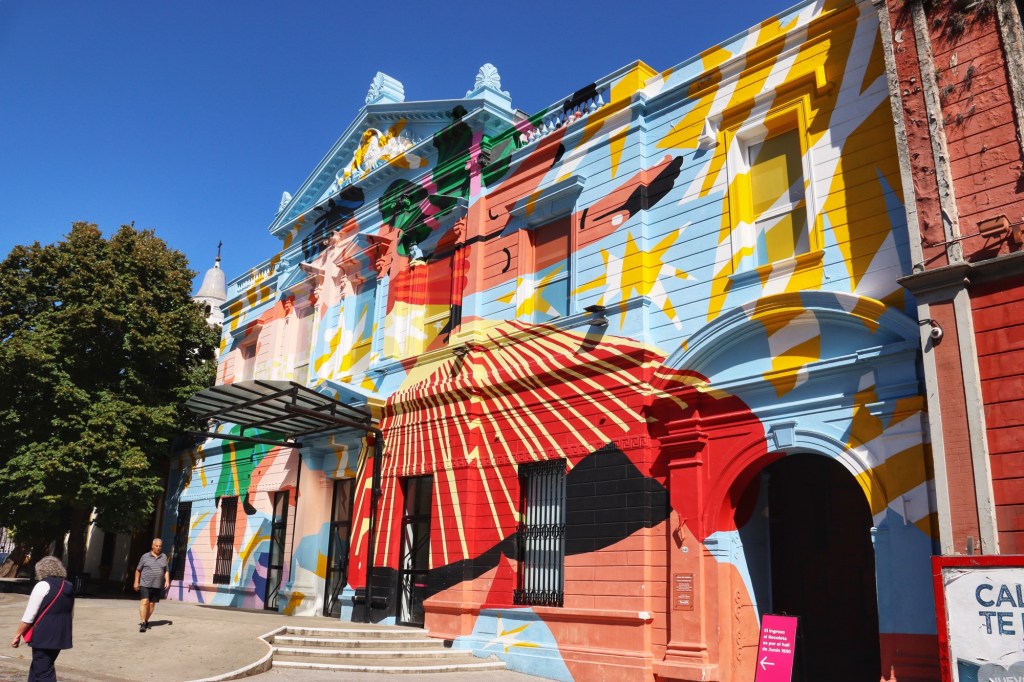
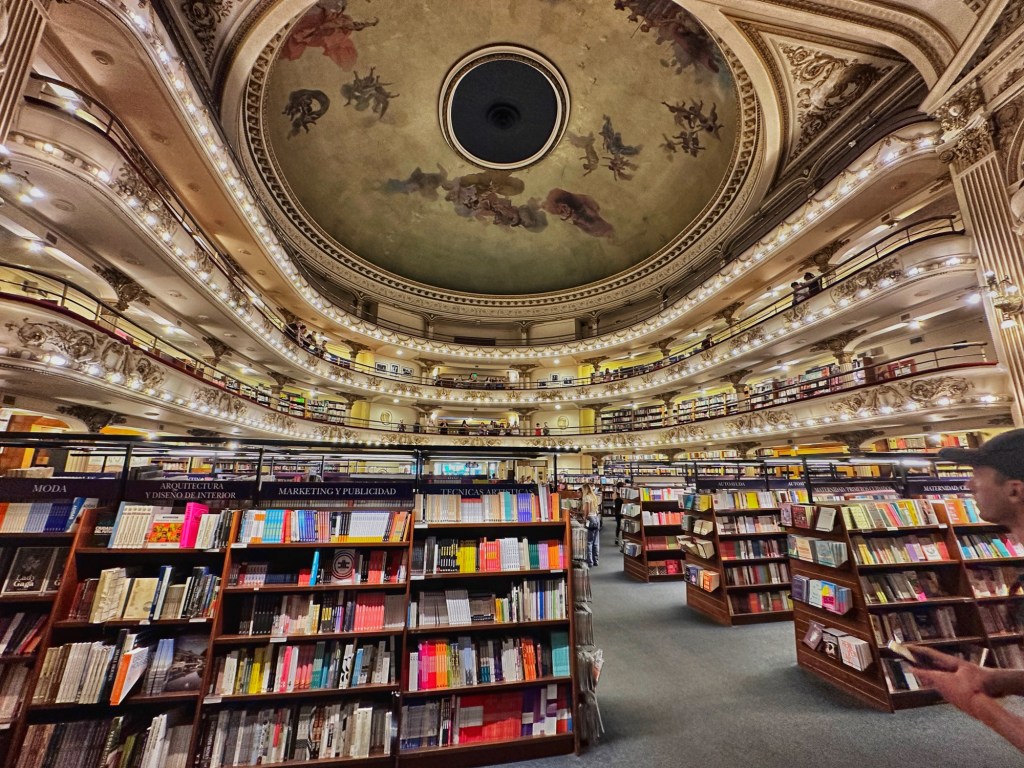
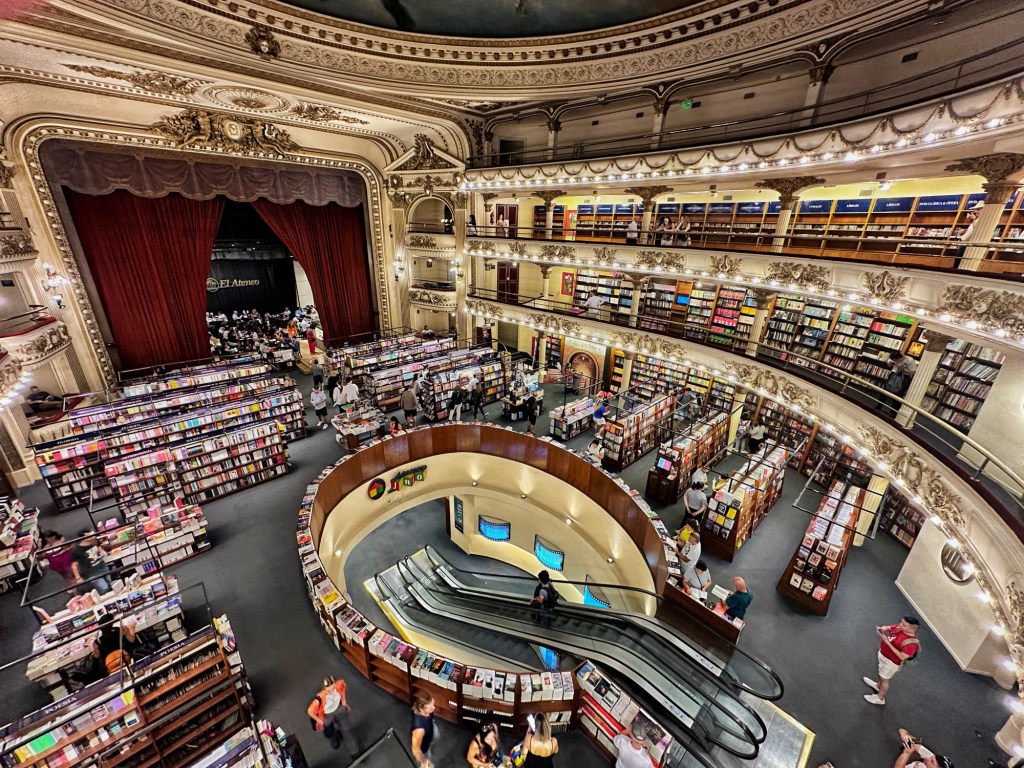
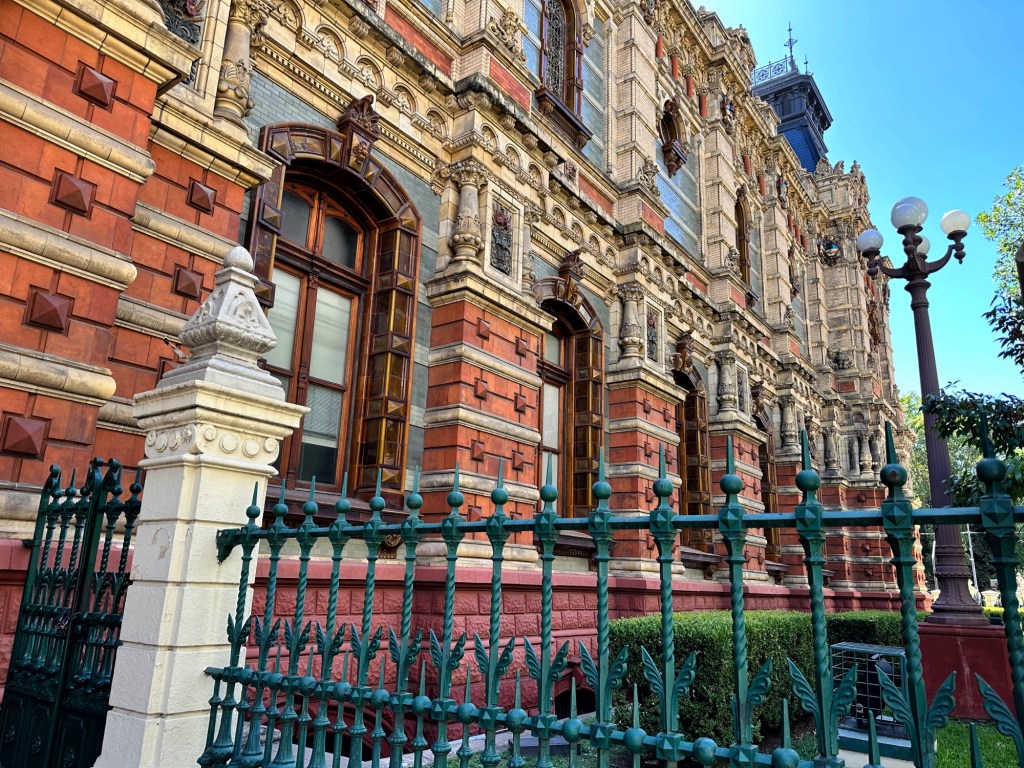
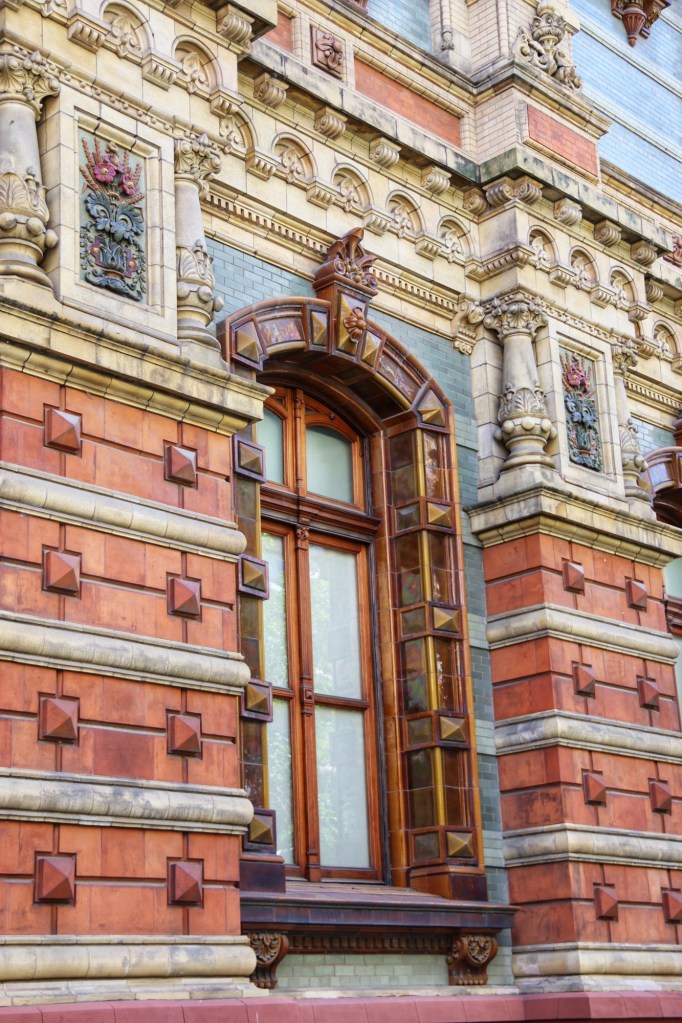
Right outside the cemetery, we had a wonderful lunch at Buller Brewing Company. We were joined by a nice couple, Gary and Mary, we met on the cemetery tour. By chance, they had just gotten off the MS Oosterdam, on the reverse cruise segment we were starting, and were staying in town until Saturday to get back on a cruise ship to Rio de Janeiro. After lunch, we went together to see the famous Libreria El Ateneo bookstore and the Museo del Agua y de la Historia Sanitaria, a water pumping station/museum within a very ornate stone and tiled facade. The bookstore is converted from a theater, giving it a sense like the Library of Congress. The original stage is now a cafe and box seats are reading rooms. The water building has over 300,000 Royal Doulton tiles as trim.
Upon returning to the ship, we went thru the obligatory muster drill before departing Buenos Aires. Attended a reception for suite cabins to meet ship officers and drink champagne. Met a mother and adult son, Catamine and Chris, from Guatemala at the reception. She has traveled extensively around the world, all seven continents already, now trying to go to every country in South America over February-April. Her family joins when they can.
I haven’t written much about food. I haven’t been able to remember to take a picture BEFORE I eat to capture the dish, and don’t want to show you an empty plate. Maybe I’ll remember tomorrow in Uruguay.
 Menu
Menu 
Leave a comment